
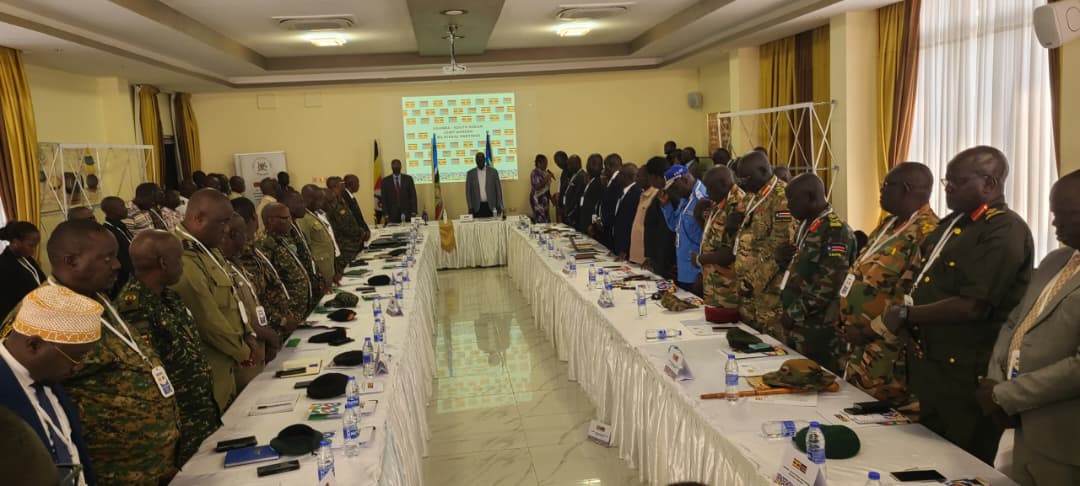
Uganda and South Sudan have started a two-day bilateral meeting in Arua City to strengthen cooperation in trade, immigration, security and cross-border relations.
The meeting has brought together senior government officials from both countries to discuss solutions to challenges affecting communities along the shared border while promoting regional integration.
On Friday, July 24, the two delegations are expected to form joint working committees to develop practical solutions to longstanding issues, particularly those involving border management, trade facilitation and movement of people.
Leading the Ugandan delegation, Uganda’s Ambassador to South Sudan Ronnie Balya described Uganda as a "second home" for South Sudanese citizens and called for the promotion of lawful movement of people, goods and services between the two countries.
Arua Resident District Commissioner Goffin Gore urged both governments to address unclear border demarcations, saying communities can continue to peacefully coexist despite international boundaries.
"In Logiri Sub-county in Arua District, we have a road that crisscrosses Uganda and the Democratic Republic of Congo, yet the people live together without conflict.
The same spirit of peaceful coexistence should prevail along the Uganda–South Sudan border," Gore said.
South Sudan’s Head of Delegation Emmanuel Adil Anthony opened his remarks by conveying condolences to Ugandans following the death of Gen. (Rtd.) Moses Ali.
He also delivered greetings from South Sudan President Salva Kiir Mayardit.
Anthony, who is also the governor of Central Equatoria State, thanked Uganda for hosting South Sudanese refugees, noting that the country remains home to more than two million refugees, the majority of whom are South Sudanese.
"I want to commend the Government of Uganda for its generosity in hosting our displaced people in different districts across Uganda. Thank you so much," he said.
On border disagreements, Anthony described the disputes as local community matters that should not affect diplomatic relations between Kampala and Juba.
"The border dispute is an unnecessary local community issue that should not drag Juba and Kampala into contestation," he said.
He called for peaceful coexistence, increased cross-border trade and stronger efforts to fight smuggling along the border.
Both delegations acknowledged that the current international boundary is a legacy of colonial rule and expressed confidence that Presidents Yower Museveni of Uganda and Salva Kiir Mayardit of South Sudan would provide political guidance towards resolving outstanding concerns.
The officials said stronger cooperation between Uganda and South Sudan would improve regional stability and help transform the two countries into an economic hub linking East and Central Africa.
